Take turns talking
Notice what catches their attention, respond and wait for their reply. Back-and-forth conversation supports early development.
Research on conversation
Why start young?
A story shared, a pattern spotted, a question explored. Early learning grows through everyday moments with people who listen, encourage and join in.
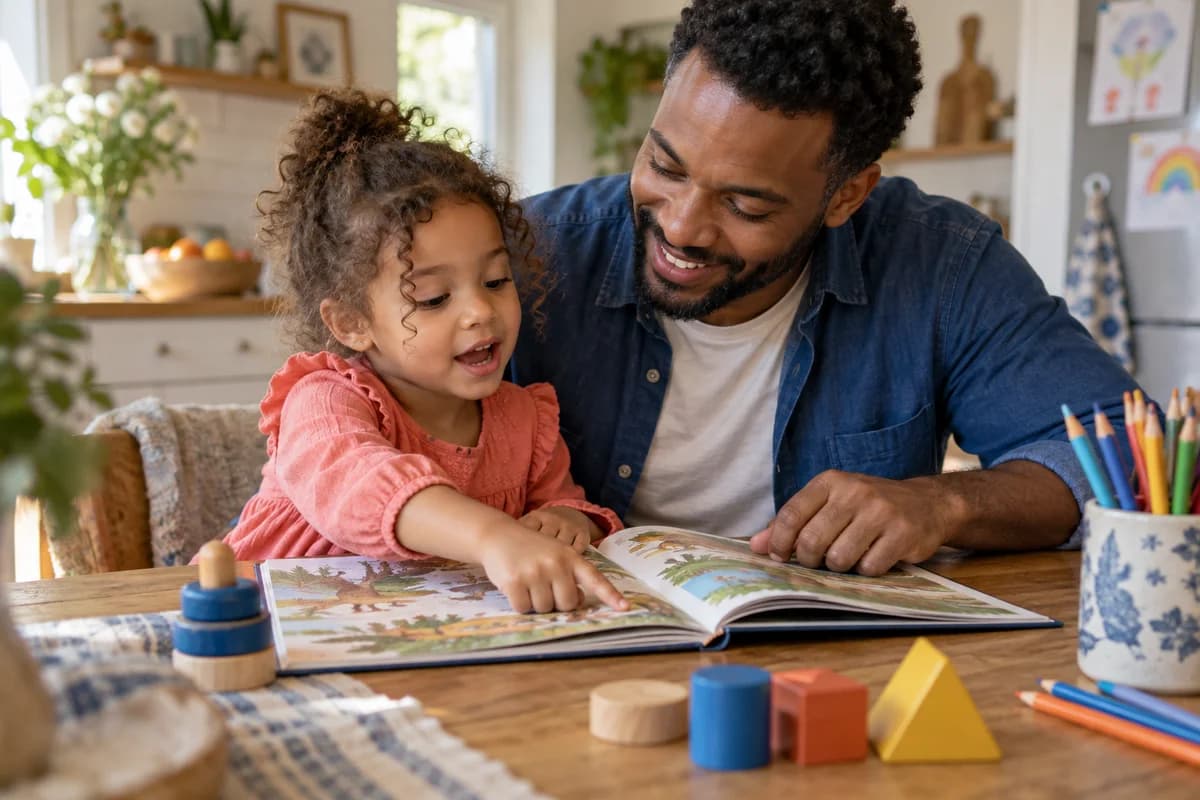
Research gives us good reasons to support language and early literacy. It also reminds us that the adult beside the child matters.
Notice what catches their attention, respond and wait for their reply. Back-and-forth conversation supports early development.
Research on conversationPicture books invite pointing, questions and ideas. Supported book-sharing can help young children develop language.
Research on shared readingEarly literacy research connects knowledge of letters and sounds with later reading. Playful practice gives children opportunities to explore both.
Research on early literacyThese are activity ideas, not age-based tests. Follow your child's interests and adapt the challenge to what they can do.
Choose a picture. Ask what they notice. Count the animals together, talk about their colours or invent a sound for each one.
Build a shape, read a short story or sort everyday objects. Ask “How did you work that out?” and listen to their explanation.
Invent a different ending, plan a small project or compare two ways to solve a problem. Invite them to explain their choices.
Notice effort, offer a useful hint and leave time to think. Keep the moment enjoyable and finish with something they want to explore next.
Evidence on adult supportEarly foundations matter, and children continue learning as they grow. Starting later does not close the door. Choose activities and a programme starting point that fit your child, rather than expecting every child of the same age to do the same work.
RTL Clubs brings together a growing family of programmes for language, maths, thinking and creativity. Each programme's page explains its learning focus and availability.